Native to Europe, this sun-loving plant thrives in open meadows, hedgerows, and along roadsides, where it produces clusters of small, bright yellow flowers. It typically comes into bloom around St. John’s Day in late June, giving rise to its traditional name. The oval leaves are marked with tiny translucent dots that become visible when held to the light, a distinctive feature of the plant.
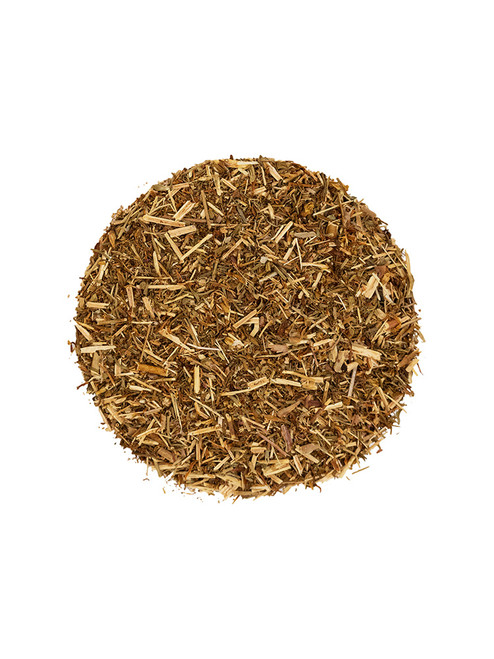
Over time, it has spread well beyond its original range and is now widely grown and gathered across North America. It is also cultivated in parts of central and southeastern Europe, where consistent growing conditions support commercial harvests. When dried, the flowering tops offer a softly resinous, grassy aroma. The infusion is pale gold, with a gently bitter, earthy character and a clean, dry finish.