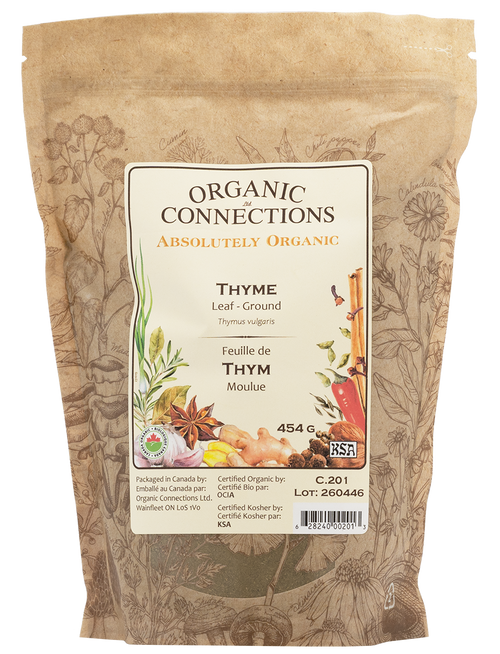
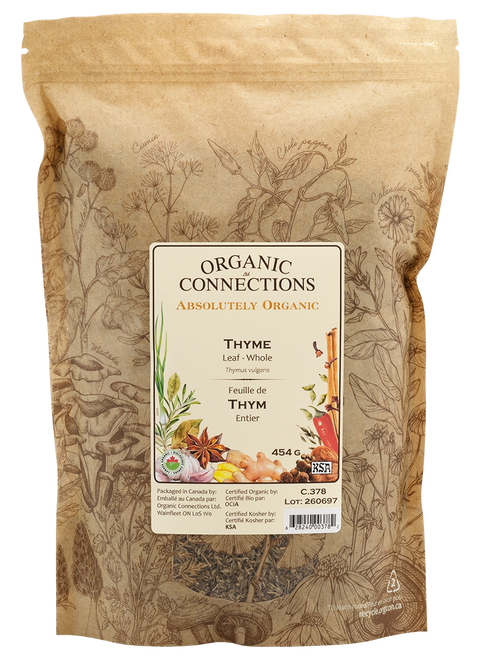
Now cultivated in many temperate regions, this small, woody herb is native to the Mediterranean region, growing on dry, rocky slopes. Its narrow stems carry tiny oval leaves and, when in season, clusters of pale pink flowers. The plant’s scent is strong for its size ~ earthy, slightly sharp, and unmistakably herbal.
References to thyme appear in early European herbals, including the writings of Pliny and later Culpeper, reflecting its long-standing role in gardens and household use. The name thyme is often traced to the Greek word thymon, associated with smoke or incense, a quiet nod to how readily the plant releases its aroma when warmed. When steeped, the leaves produce a light amber infusion with a straightforward, savory taste and a clean finish.