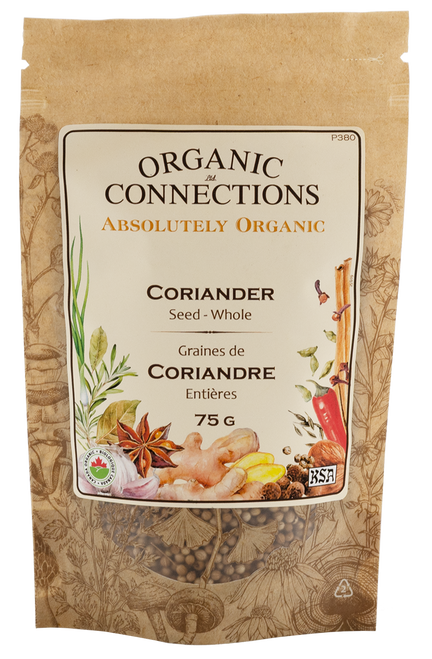
Bright Side Up ~ Coriander seed contains a world of tangy citrus peel, warm nuttiness, and a mild spicy bite. It comes from the same plant that produces the leaves we commonly call cilantro ~ the two have very different tastes. Native to regions stretching from the eastern Mediterranean to Pakistan, Coriander seed brings its bright, earthy punch to Indian cuisine, spice blends, brines, chutneys, and condiments.
Coriander’s fragrant warmth has travelled through kitchens across South Asia, Europe, Latin America, and North Africa. It’s become an important curry spice, is fundamental to many Middle Eastern dishes, and has established itself in kitchens around the world.
Coriander also has a lively second career behind the bar and in the brewhouse. It is one of the most common botanicals used in gin after juniper, and its citrus and spice notes help give the spirit lift and structure. Brewers traditionally use it in Belgian-style wheat beers, often alongside orange peel, to create a fragrant, lightly spicy finish.
When left whole, Coriander is as floral as cardamom, with an aroma packed full of citrus, resinous notes, and light sweetness, along with a distinct crunch. Infuse the seeds whole by adding them to the pot and simmering them in pickles, soups, and stews, or grind them with a mortar and pestle or coffee grinder for curries, roasted veg, lentils, bread, fish, and spice blends.
When roasted and then ground, nutty aromas shine through, softening the citrus notes and bringing out a deeper character. Coriander's character deepens the longer it cooks, but its unique tang falls into the background. How you use it is up to you ~ a world of possibilities awaits.
Toast the seeds briefly to deepen their nutty character. You can do this by warming them in a pan until fragrant or baking them in the oven at 300°F (150°C). Coriander seed goes well with cumin, fennel, and chili, completes the combo.

 Larger Pack Bulk (C#)



 Spice Bottles (R#)