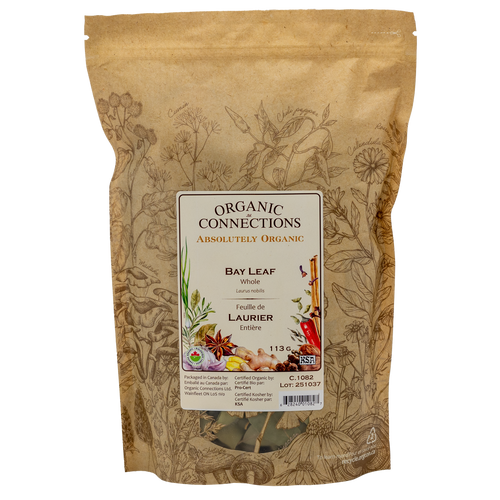
Laurel Legend ~ These leaves come from the Bay Laurel bush ~ a sleek evergreen tree native to the Mediterranean region. By evergreen, we don’t mean that it has needle-like leaves, but instead the leaves never fall off the tree because it’s a hardy bush growing where the weather is warm. The dried whole leaves are firm and olive toned, with a mild woodsy-peppery essence that smells of eucalyptus and apples that is releases when the dry leaves are simmered. The deep aroma develops gradually in pressure cookers, pots, and roasts. Bay has inhabited Mediterranean kitchens for centuries and has become an indispensable staple.
Long before Bay leaf settled into soup pots, Laurel wreaths once crowned winners of ancient contests of strength and athletics. The branches later became symbols of victory, achievement, and status in Roman culture.
In the kitchen, Bay is a binding spice ~ a way to unify the competing ingredients of a dish. Bay is never the only seasoning, even though it has a fantastic aroma once simmered or cooked, because it’s more effective as a rounding ingredient.
Here are a few places you’ll usually find this amazing spice hard at work:
-
Part of bouquet garni.
-
Part of most (good) pickle jars – always add it to your jar while packing the cucumbers, before adding brine.
-
Add a few leaves to the pot when you add liquid to soups, stews and sauces.
-
Some chefs will powder the bay leaves and add directly to fine sauces for the unifying effect. In this manner, you’ll get a quick, intense boost to the character of a dish without the long cooking time.
Add one or two whole leaves to liquid near the beginning of cooking so they can share their character. The leaves remain tough after cooking and are not good eats ~ you should remove them before serving.