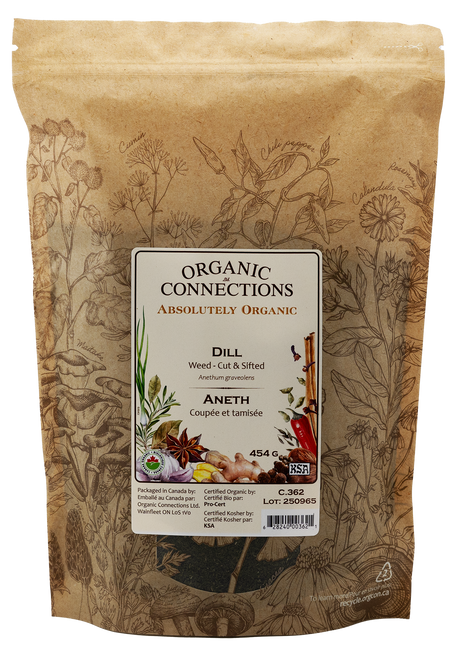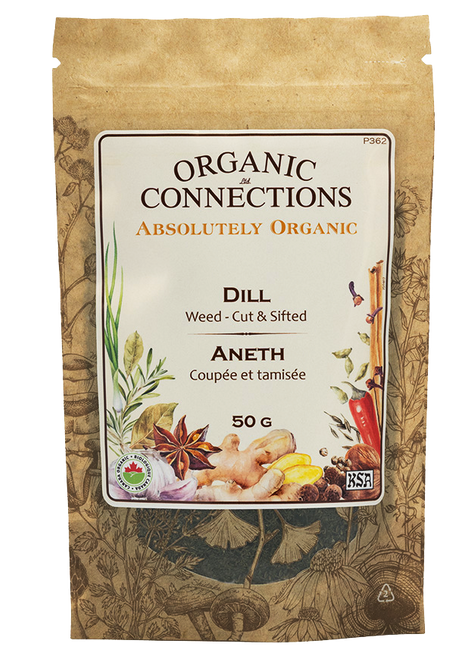


Hailing from the Mediterranean, dill's culinary use can be traced back to the ancient Egyptians, Greeks and Romans. European settlers introduced it to the Americas, where the indigenous American peoples readily incororated it into their cooking and folk medicine chest.
This annual herb has a feathery foliage (known as 'dill weed') with clusters of yellow flowers that bear distinctive, aromatic seeds. Beyond its use as a pickling spice, dill weed complements fish and is great in dips, salad dressings and creamy sauces. It loses its flavour if overheated, so always add it toward the end of cooking in hot dishes.
This annual herb has a feathery foliage (known as 'dill weed') with clusters of yellow flowers that bear distinctive, aromatic seeds. Beyond its use as a pickling spice, dill weed complements fish and is great in dips, salad dressings and creamy sauces. It loses its flavour if overheated, so always add it toward the end of cooking in hot dishes.